IMPLANTOLOGY

Implant-supported prosthesis

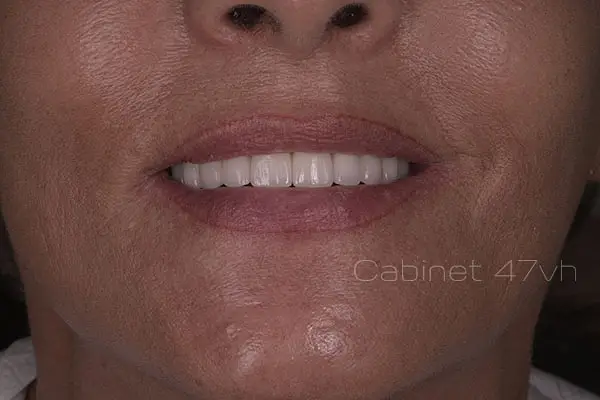
After implant placement, the implant-supported prosthesis provides the visible restoration of the tooth, with the aim of ensuring comfort, aesthetics, and long-term stability.

Schedule an initial consultation

Key points

The implant-supported prosthesis is the visible and functional part fixed onto the implant. It restores both the aesthetics and masticatory function of the missing tooth.
At the 47VH clinic in Nice, we work with specialized dental laboratories to design custom restorations tailored to each clinical situation and aesthetic objective.

What is an implant-supported prosthesis?

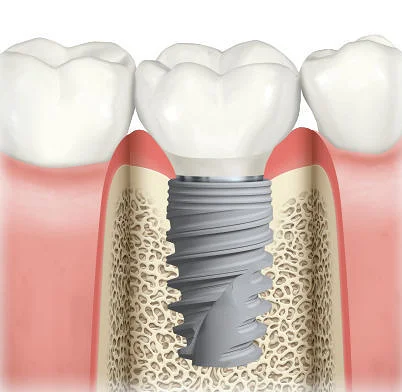
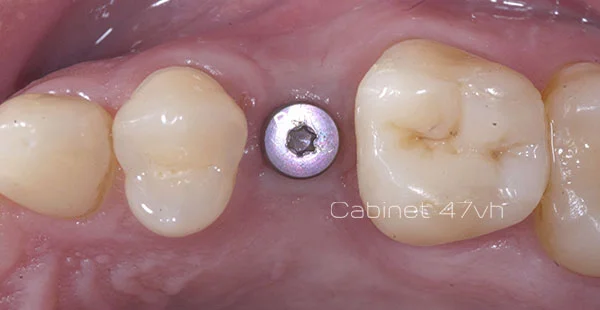
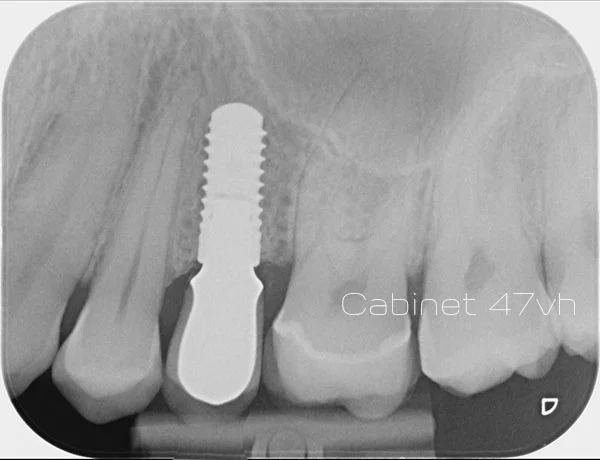
The implant-supported prosthesis is the visible tooth that emerges from the gum. It is attached to the dental implant via a prosthetic abutment—a connecting component between the implant and the crown.

A dental technician fabricates it on a custom basis, according to the dentist’s prescription. Materials vary depending on the clinical situation and aesthetic requirements: ceramic, zirconia, titanium, or metal.

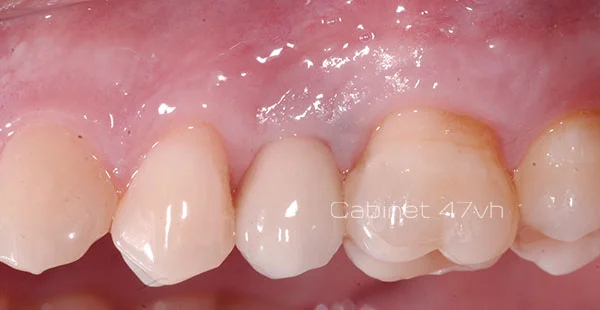
Couronne prothétique fixée sur un implant dentaire après ostéointégration

Different types of implant prostheses

Missing tooth — single implant crown

We place an implant topped with an independent crown, without affecting the adjacent teeth. This is the most conservative and natural solution for replacing a single missing tooth.

Schéma d'une couronne sur implant

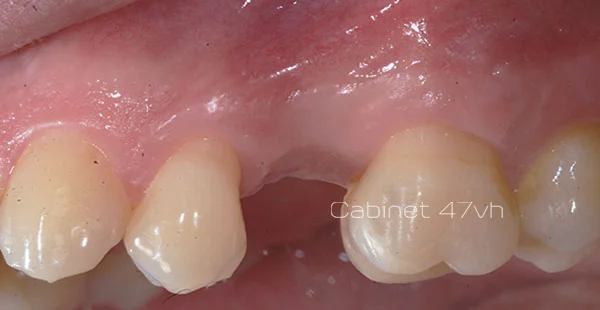
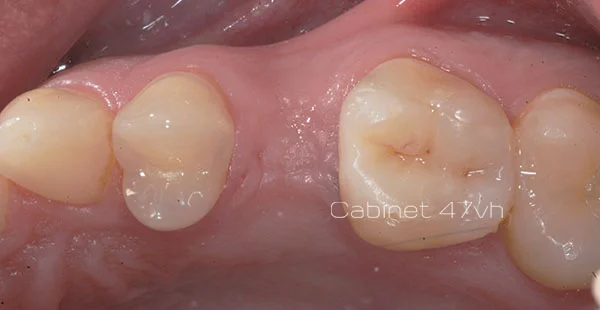
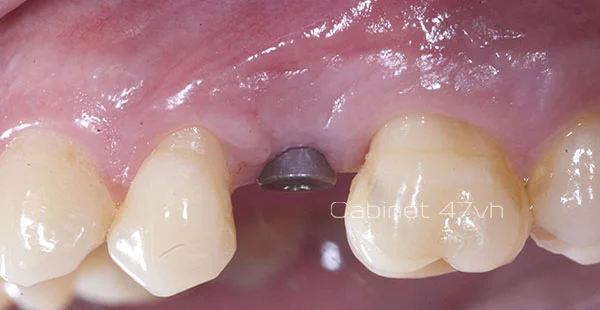
Clinical case

Single implant prosthesis

Multiple missing teeth — implant-supported bridge

We place multiple implants connected by a bridge. Two implants are generally sufficient to replace three teeth. This solution avoids placing a large number of implants while ensuring a stable and functional reconstruction.

Schéma de bridge sur implant

All missing teeth — two solutions

1. Removable prosthesis on attachments

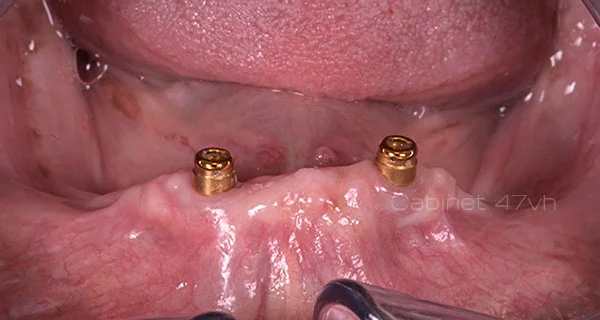
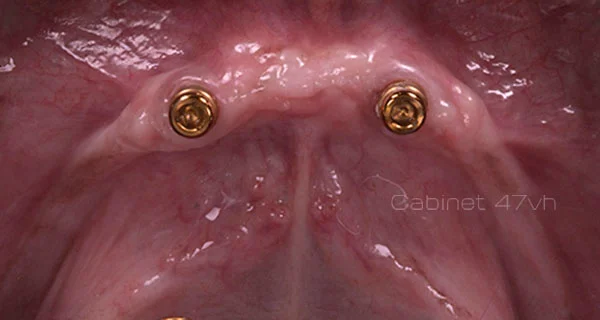
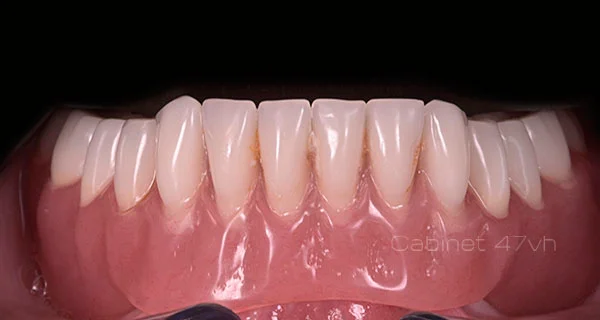
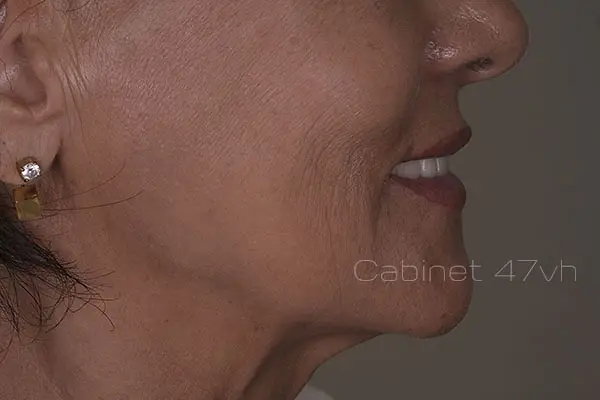
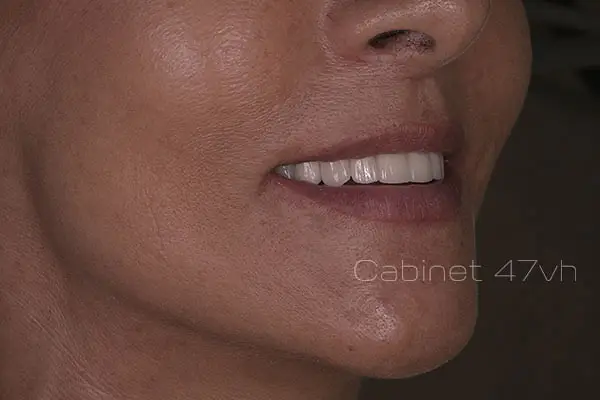
We place two to four implants that stabilize a removable acrylic prosthesis using a snap-on attachment system. The patient removes the prosthesis daily for cleaning. This solution significantly improves comfort and stability compared with a conventional denture.

Schéma d'un appareil amovible avec attachements sur implant

Clinical case

Removable implant-retained prosthesis

2. Fixed full-arch implant bridge

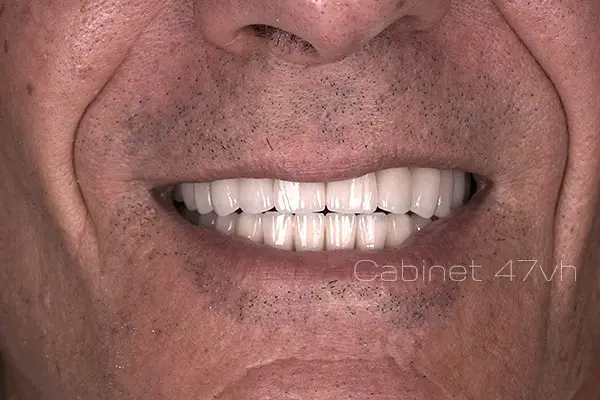
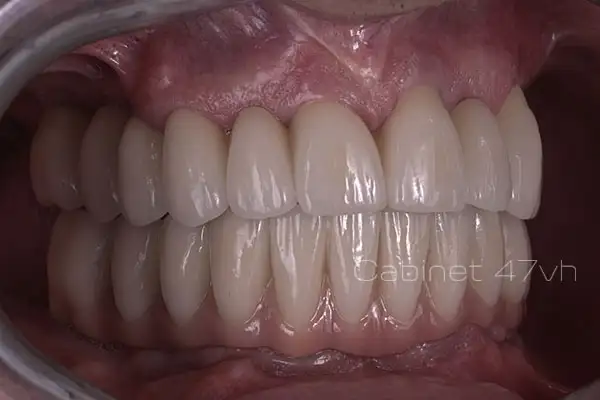
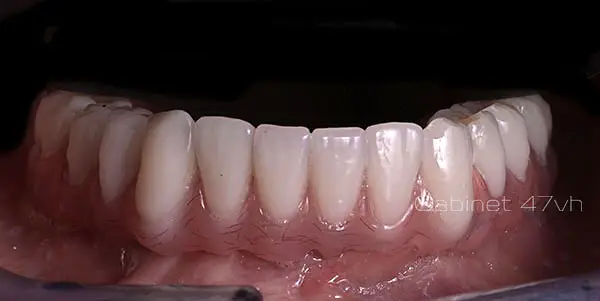
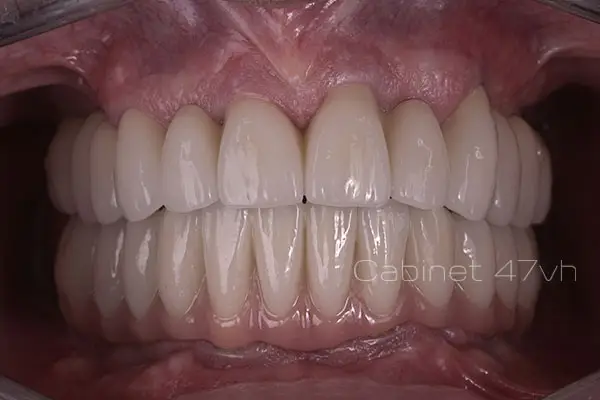
We place four to six implants that support a fixed full-arch bridge—made of ceramic or reinforced resin. The patient never removes this prosthesis. It is the most comfortable solution and the closest to natural dentition when all teeth are missing.

Schéma de bridge complet sur implant

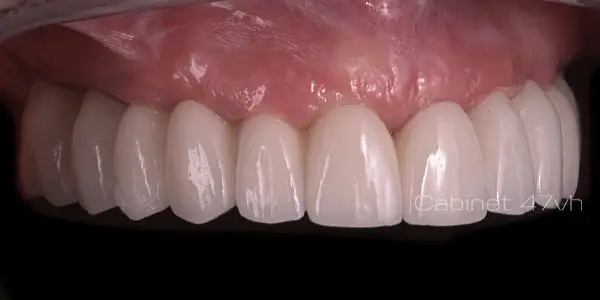
Clinical case

Ceramic implant bridge on 6 implants

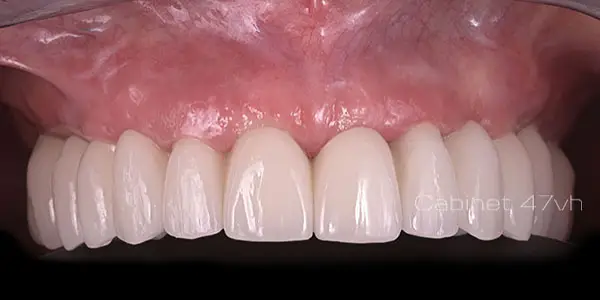
Clinical case

Ceramic implant bridge on 6 implants, with or without artificial gingiva

Clinical case

Resin implant bridge on 6 implants with artificial gingiva

Bibliographic References

  1. Papaspyridakos P. et al. — A systematic review of biologic and technical complications with fixed implant rehabilitations for edentulous patients. Int J Oral Maxillofac Implants, 2012. PubMed PMID 22299086
  2. Maló P. et al. — “All-on-4” immediate-function concept for completely edentulous maxillae: a clinical report on the medium (3 years) and long-term (5 years) outcomes. Clin Implant Dent Relat Res, 2012. PubMed PMID 22008153
  3. Pjetursson B.E. et al. — A systematic review of the survival and complication rates of implant-supported fixed dental prostheses (FDPs) after a mean observation period of at least 5 years. Clin Oral Implants Res, 2012. PubMed PMID 23062125
  4. Schwarz F. et al. — Loading protocols and implant supported restorations. Clin Oral Implants Res, 2016. PubMed PMID 26748679
  5. Yin X., Li J., Chen T., Mouraret S., Dhamdhere G., Brunski J.B., Zou S., Helms J.A. — Rescuing failed oral implants via WNT activation. J Clin Periodontol, 2016. PubMed PMID 26718012

Dr Sylvain Mouraret’s opinion

In my practice, implant prosthetics are as important as the surgical phase, because the implant is only a support: it must be positioned according to the prosthetic plan. The crown or bridge must integrate precisely, respect occlusion, and restore proper function for the patient. An error anywhere in the treatment chain can affect the final outcome and, over time, compromise implant stability. In fact, most late complications involve the prosthesis rather than the implant itself. This is why screw-retained prostheses are particularly valuable, as they can often be repaired, replaced, or re-screwed without removing the implant.

FAQ

What is the difference between the implant and the prosthesis?

The implant is the artificial root screwed into the bone — the prosthesis is the visible tooth attached to it.

These two components are distinct but complementary. The implant provides anchorage within the bone, while the prosthesis restores chewing function and aesthetics. If the prosthesis wears over time, it can be replaced without affecting the implant.
How long does an implant-supported prosthesis last?

An implant-supported prosthesis typically lasts 15 to 20 years, depending on materials and maintenance.

The implant itself can last a lifetime when properly integrated and maintained. However, the prosthetic crown gradually wears under masticatory forces. Regular maintenance follow-up helps detect early signs of wear.

Is the implant-supported prosthesis aesthetic?

Yes — it is custom-designed to integrate naturally into your smile.

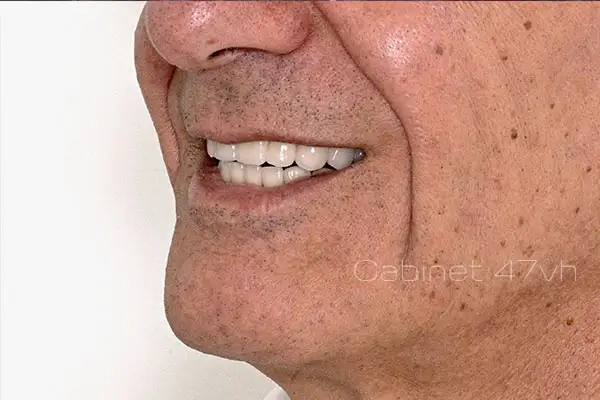
The dental technician adjusts the shade, shape, and translucency of the ceramic to match your natural teeth. In most cases, the result is indistinguishable from a natural tooth.

Can you eat normally with an implant-supported prosthesis?

Yes — it restores chewing function close to that of a natural tooth.

Unlike removable dentures, it is fixed and does not move or require adhesive. However, during the healing phase with a temporary prosthesis, we recommend avoiding hard or crunchy foods to prevent overload on the implant.

Who fabricates the implant-supported prosthesis?

A dental laboratory technician fabricates it on a custom basis, according to our prescriptions.

We work with specialised laboratories to ensure precision and quality. We also systematically check the fit and aesthetics before final placement.

Does an implant-supported prosthesis require special maintenance?

It is maintained like a natural tooth — regular brushing and interdental cleaning.

However, certain areas around the prosthetic abutment are difficult to access. This is why we recommend regular implant maintenance visits, usually every six months, to clean inaccessible areas and prevent peri-implant disease.

Schedule an Appointment for a Dental Implant in Nice

A specialized consultation at the clinic allows for a thorough assessment of your clinical situation and the development of the most appropriate implant treatment strategy.


Response within 48 Hours


Confidential care


Clinic dedicated to Implant dentistry