IMPLANTOLOGY
Implant in the aesthetic zone
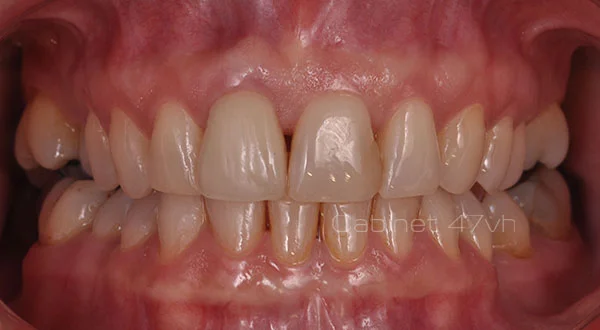
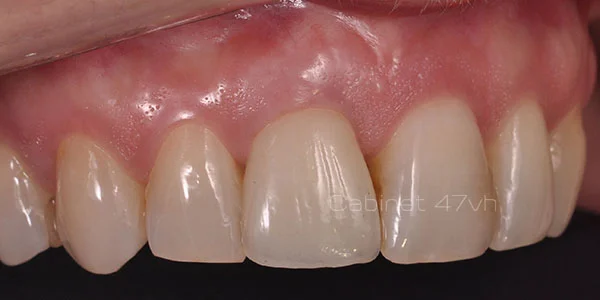
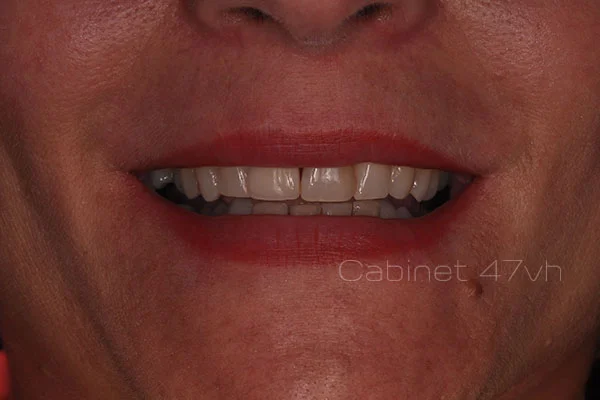
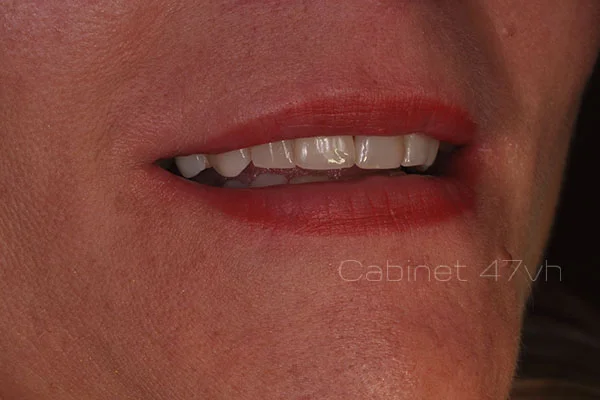
In the aesthetic zone, dental implant placement requires precise planning to preserve smile harmony, gingival volume, and the final prosthetic outcome.
Schedule an initial consultation →
In the aesthetic zone, dental implant placement requires precise planning to preserve smile harmony, gingival volume, and the final prosthetic outcome.
Schedule an initial consultation →In the aesthetic zone, dental implant placement requires precise planning and rigorous management of both soft and hard tissues.
At the 47VH clinic in Nice, we perform tooth extraction, implant placement, gingival grafting, and a provisional restoration in a single session, in order to preserve smile harmony from the day of surgery.
An implant in the aesthetic zone is a dental implant placed in a visible area of the smile—incisors, canines, and premolars in both arches. In this region, the aesthetic outcome is as important as the functional result.
To achieve a natural and harmonious result, we pay particular attention to two key elements:
These two elements are interdependent. An optimal outcome requires treating them simultaneously, from the surgical phase onwards.

When a tooth is extracted, the underlying bone begins to resorb rapidly. Within less than three months, this resorption leads to an irreversible loss of both bone and gingival volume. These changes directly compromise the aesthetics of the future implant restoration.
This is why we apply specific protocols immediately after extraction to limit resorption and stabilize the tissues. In addition, we place a fixed provisional restoration on the same day in order to preserve smile aesthetics without interruption.
We perform all steps in a single procedure:
We remove the tooth while preserving as much as possible the surrounding bone and gingival structures.
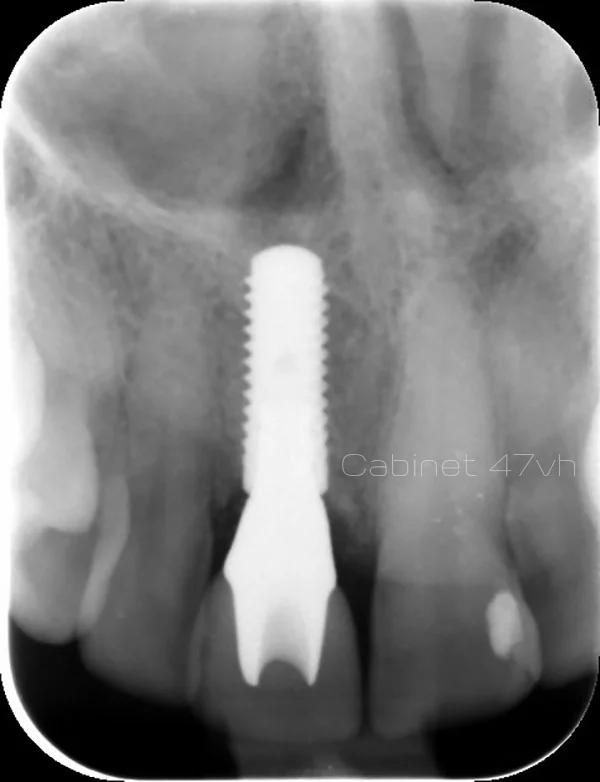
We place the implant in a precise three-dimensional position, pre-determined using CBCT imaging.
We fill the extraction socket with a biomaterial to limit post-extraction bone resorption.
We harvest a fragment of connective tissue—usually from the upper wisdom tooth area—and insert it using a tunnel technique between the bone and the gum. This graft thickens the soft tissues and helps anticipate future resorption.
We place a prosthetic abutment and a screw-retained provisional crown at the end of the procedure. This allows you to leave the same day with a temporary tooth that is both aesthetic and functional.
Approximately three months after the procedure, once osseointegration is confirmed, we replace the provisional abutment and temporary crown with a definitive abutment and a custom-made ceramic crown, perfectly integrated into your smile.
Dental implant in the aesthetic zone
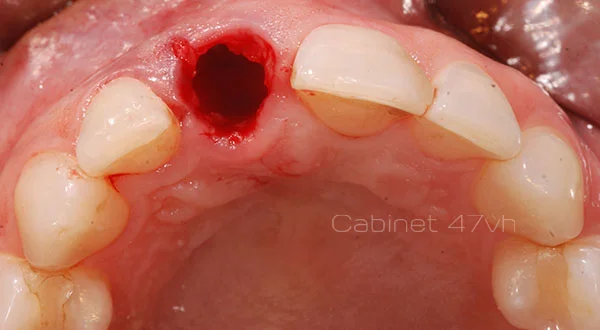
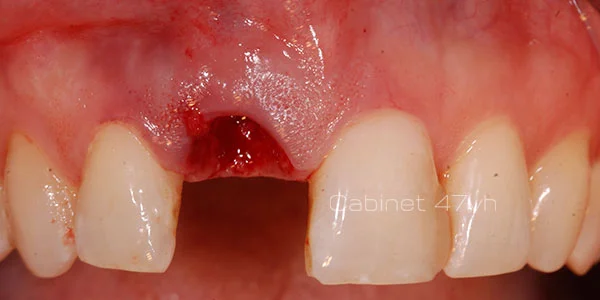
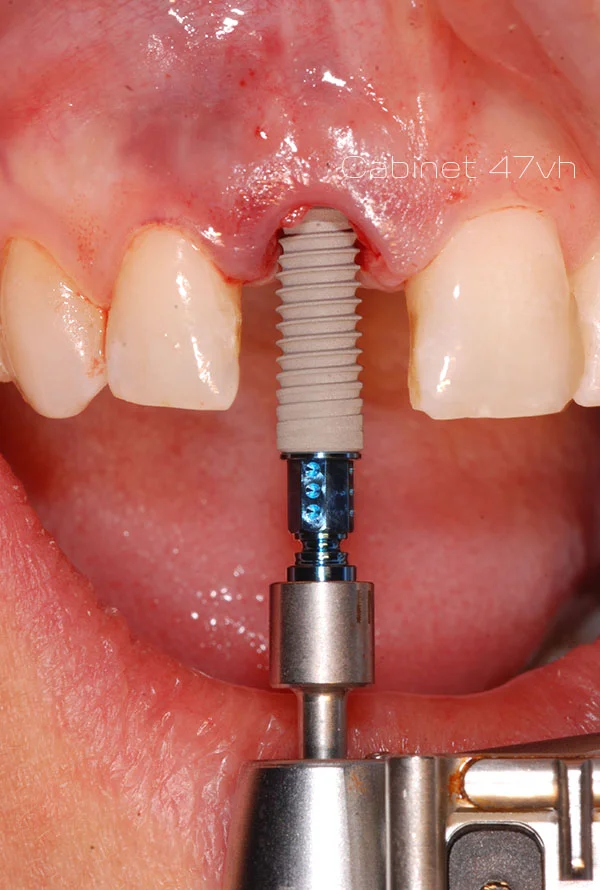
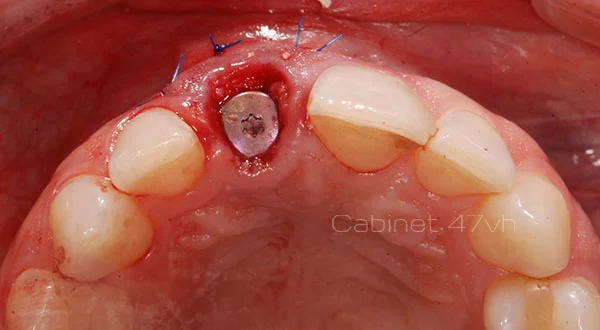
“
Dr Sylvain Mouraret’s opinion
In my practice, implant placement in the anterior zone is one of the most demanding situations in implant dentistry. The challenge is not only to replace a missing tooth, but to preserve smile aesthetics, gingival contour, and prosthetic axis. The buccal bone wall is often thin, the gingival architecture more scalloped, and tissue remodelling over time can influence the final aesthetic outcome. For this reason, we aim to preserve or reconstruct soft tissue volume, often using a connective tissue graft. A well-positioned implant, surrounded by an adequate thickness of soft and hard tissues, generally provides excellent long-term aesthetic stability.
In the aesthetic zone, the result is visible in the smile—any gingival asymmetry or subtle difference in shade is immediately noticeable.
This is why we manage both the surgical and prosthetic components from the very beginning of treatment. A well-positioned implant surrounded by insufficient gum tissue will never produce a natural-looking result.
Not systematically—but in most cases, we recommend it.
Indeed, tooth extraction leads to predictable bone resorption and soft tissue collapse. A subepithelial connective tissue graft helps anticipate this loss and maintain sufficient gingival volume around the implant. Without this step, the long-term aesthetic outcome is often compromised.
Yes — this is precisely the goal of our protocol in the aesthetic zone.
When bone and biological conditions allow it, we extract the tooth, place the implant, and attach a temporary crown during the same session. This means you leave the clinic with an immediate fixed and aesthetic provisional tooth.
Yes — it is designed to integrate harmoniously into your smile from the moment it is placed.
However, it remains a temporary restoration. Approximately three months after the procedure, once osseointegration is confirmed, it is replaced with a definitive ceramic crown, customised in both colour and shape.
The surgical procedure is completed in a single session. The final crown is placed approximately three months later.
Overall, the complete treatment — from extraction to final restoration — takes about three to four months. If prior bone reconstruction is required, this timeline may be extended.
Yes—provided that regular maintenance follow-up is respected.
Indeed, the stability of the result depends on maintaining both gingival and bone volume around the implant. This is why we establish a personalized implant maintenance program after placement of the definitive prosthesis.