PERIODONTOLOGY
Surgical periodontal treatment
Surgical periodontal treatment may be indicated when deep lesions persist despite initial therapy, in order to access affected areas and stabilize the disease.
Schedule an initial consultation →
Surgical periodontal treatment may be indicated when deep lesions persist despite initial therapy, in order to access affected areas and stabilize the disease.
Schedule an initial consultation →Le traitement parodontal chirurgical complète le traitement non chirurgical lorsque certaines lésions profondes persistent après la phase initiale.
Au cabinet 47VH à Nice, nous proposons une chirurgie ciblée uniquement lorsqu’elle apporte un bénéfice supérieur au traitement non chirurgical seul. L’objectif reste constant : contrôler l’infection, stabiliser les tissus de soutien et préserver les dents.
In some advanced cases, surgical intervention is required to complete etiological treatment when the expected outcomes are not fully achieved.
After re-evaluating the response to initial treatment, we may recommend targeted surgery to access deep areas and stabilize the periodontal condition. We always prioritize non-surgical treatment when the prognosis is equivalent.
Periodontal surgery allows us to:
This technique allows access to root surfaces located in the deepest areas—between teeth or in the furcation areas of premolars and molars. We can also reshape the bone contours to reduce periodontal pockets and improve local anatomy.
After thorough cleaning of the root surfaces, we apply enamel matrix derivatives (amelogenins). These biomaterials stimulate the natural regeneration of periodontal tissues—ligament, alveolar bone, and cementum.
Regenerative periodontal surgery
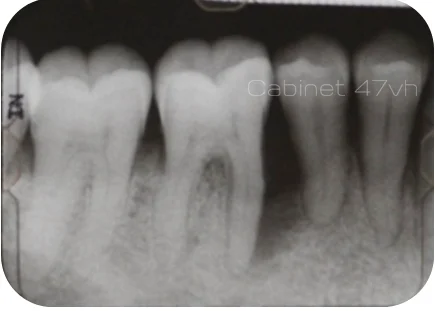
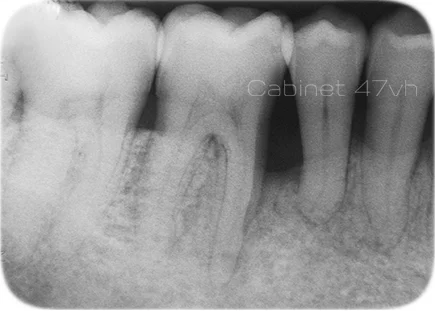
After decontamination of the deep periodontal areas, we place a resorbable membrane that controls healing and guides regeneration of the supporting tissues.
This procedure restores the biological space, allowing the gum to reattach to the tooth at an adequate height. We perform bone reshaping and reposition the gum tissue. This surgery can also correct gingival position prior to the placement of an aesthetic ceramic restoration or in cases of a gummy smile.
Before prosthetic treatment, we optimize the periodontal environment: resection of molar roots when indicated, restoration of biological space, bone reshaping, and thickening and repositioning of the gingival tissues.
Pre-prosthetic surgery
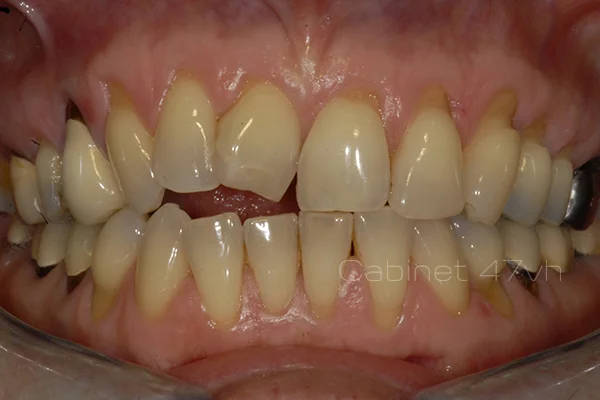
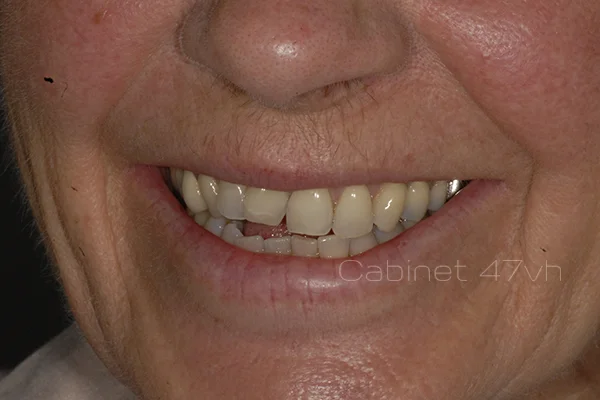
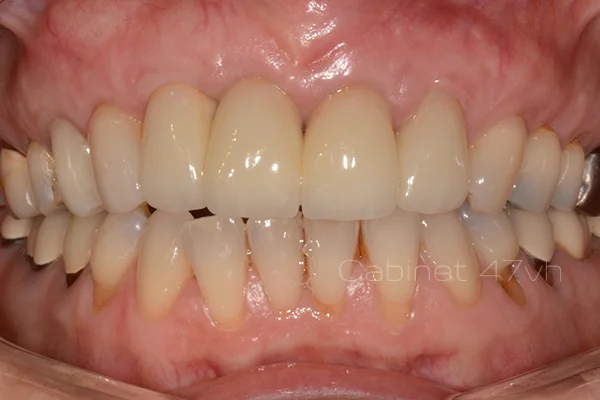
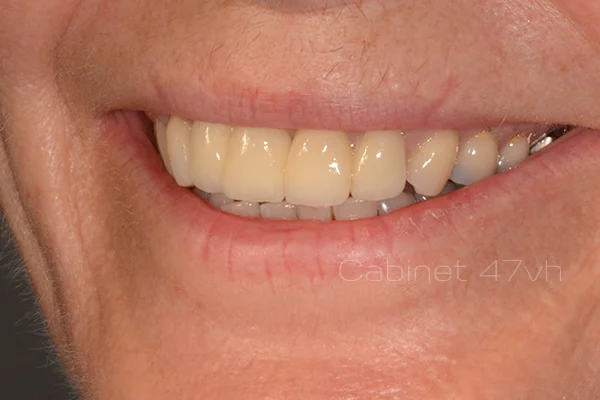
This surgery allows the reconstruction and repositioning of soft tissues around teeth and implants. We mainly use the subepithelial connective tissue graft—the most advanced technique, providing optimal aesthetic and functional outcomes. Only the inner layer of palatal tissue is harvested and placed beneath thin or improperly positioned gums.
Once the surgical phase is completed, periodontal maintenance is essential to preserve the achieved results.
These regular visits—typically every three to four months—help control inflammation, remove hard-to-reach deposits, and prevent recurrence. Periodontitis is a chronic disease: treatment stabilizes it, while maintenance keeps it under long-term control.
All periodontal surgery is performed under local anesthesia—you do not feel any pain during the procedure. Conscious sedation is available on request.
Post-operative outcomes depend on the type of surgery performed. Moderate swelling and local discomfort may occur for 5 to 7 days. At the end of each procedure, we systematically provide an appropriate medication prescription as well as detailed written post-operative instructions, including hygiene recommendations and temporary dietary guidelines.
We recommend resting on the day of the procedure. Most patients are able to return to work the following day.
The cost of periodontal surgery depends on the type of procedure, the number of teeth involved, and the extent of the lesions. Localized debridement surgery is less expensive than extensive tissue regeneration or multi-site surgery.
Periodontal surgical procedures are not covered by social security. Your private insurance may cover part of the cost depending on the terms of your policy.
We provide a detailed and personalized estimate during the consultation, after a complete clinical and radiological assessment. An interest-free installment payment option is available to facilitate access to treatment.
“
Dr Sylvain Mouraret’s opinion
In my practice, periodontal surgery should not be proposed too early. After the initial therapy, tissues may still improve if subgingival calculus has been properly removed, if plaque control is effective, and if maintenance is well followed. Surgery becomes relevant when periodontal pockets persist despite this first phase of treatment. It then allows access to deep areas, removal of inflammatory tissue, and, when necessary, soft and hard tissue reshaping. When the osseous defect is suitable, regenerative surgery is a preferred technique to promote new attachment and improve long-term periodontal stability.
Surgery is only indicated when non-surgical treatment is not sufficient to stabilise the disease.
We recommend it only when it provides a proven additional benefit. The decision is made during the periodontal re-evaluation, approximately two months after the initial phase.
Non-surgical treatment cleans the root surfaces from the outside; surgery allows direct access to them.
When periodontal pockets are very deep or root anatomy is complex, non-surgical instruments cannot reach all contaminated areas. Surgery removes this limitation and allows more complete decontamination.
All periodontal surgery is performed under local anesthesia — you will feel no pain during the procedure.
Post-operative effects vary depending on the type of treatment. Moderate swelling and local discomfort may persist for 5 to 7 days. A tailored prescription and written post-operative instructions are systematically provided.
Visible healing is generally complete within 2 to 3 weeks.
Complete tissue maturation and stabilization of periodontal results are typically assessed at 3 to 6 months. A re-evaluation is performed after this period to confirm stability.
We recommend resting on the day of the procedure.
Most patients return to work the following day. More extensive procedures may require an additional day of rest. We inform you on a case-by-case basis depending on the type of surgery planned.
Periodontal surgical procedures are not covered by the National Health Insurance system.
Your private insurance may cover part of the cost depending on the terms of your policy. We provide a detailed estimate during the consultation.
No — surgery complements non-surgical treatment; it does not replace it.
Both phases form a continuous therapeutic process. After surgery, we implement periodontal maintenance to ensure long-term stability of the results.