Dental Implant in Nice
Une prise en charge chirurgicale spécialisée pour remplacer une ou plusieurs dents manquantes, avec une planification précise et des solutions adaptées aux cas simples comme complexes.
Réserver un premier rendez-vous →Une prise en charge chirurgicale spécialisée pour remplacer une ou plusieurs dents manquantes, avec une planification précise et des solutions adaptées aux cas simples comme complexes.
Réserver un premier rendez-vous →En résumé
Un implant dentaire permet de remplacer une dent absente par une racine artificielle en titane ou en zircone. Au cabinet 47VH à Nice, les traitements implantaires sont planifiés par imagerie 3D et réalisés dans un cadre exclusivement dédié à l’implantologie, à la parodontologie et à la chirurgie orale spécialisée.
Cette approche permet d’adapter le traitement aux situations simples comme aux cas plus complexes : manque osseux, extraction préalable, secteur esthétique, antécédent de parodontite ou reprise d’un ancien traitement implantaire.
Are you looking for a dental implant in Nice in a clinic exclusively dedicated to implant and periodontal surgery?
The 47VH clinic in Nice is a limited-scope practice dedicated to implant dentistry and periodontal surgery. It manages both straightforward cases and complex situations requiring bone reconstruction.
Situé boulevard Victor Hugo, au centre de Nice, le cabinet concentre son activité sur la chirurgie implantaire et la parodontologie. Il ne pratique pas de dentisterie générale.
Ce choix d’exercice ciblé garantit une maîtrise technique approfondie des actes chirurgicaux. Il permet également de porter une attention particulière à la stabilité biologique à long terme.
Le cabinet accueille des patients de Nice centre, du Carré d’Or, des Musiciens, de Gambetta et de Libération. Il reçoit également des patients adressés par des confrères pour des prises en charge chirurgicales spécifiques. En raison de cette orientation spécialisée, certains patients se déplacent depuis d’autres régions de France, voire depuis l’étranger.
The clinic’s organization is based on a dedicated surgical practice in implantology and periodontology. This structure allows complete focus on implant and periodontal procedures without the dispersion associated with general dentistry.
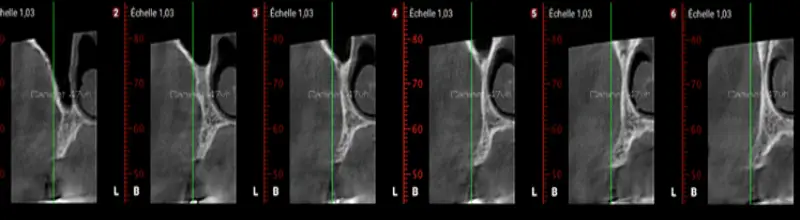
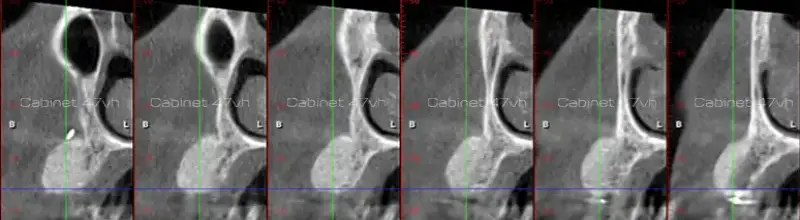
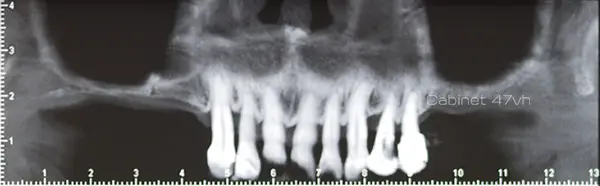
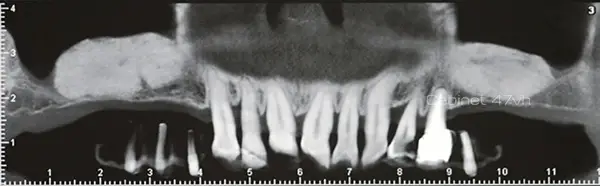
Each implant treatment is planned using three-dimensional CBCT imaging, ensuring precise anatomical analysis and rigorous anticipation of biomechanical constraints.
Le cabinet collabore avec des praticiens correspondants afin d’assurer la continuité des soins. Il prend en charge les situations complexes — pertes osseuses, greffes, échecs implantaires — et met en place un suivi post-opératoire structuré destiné à sécuriser la cicatrisation et la pérennité implantaire.
The 47VH clinic works in collaboration with referring practitioners in Nice and throughout the Alpes-Maritimes region, particularly for specialized surgical indications in implantology and periodontology.
Après la phase chirurgicale, le patient peut poursuivre sa prise en charge prothétique avec son dentiste traitant. Selon la situation clinique, un suivi conjoint peut être organisé afin d’assurer la cohérence thérapeutique.
This structure allows advanced technical specialization while guaranteeing continuity of care and a clear distribution of responsibilities.
L’implantologie constitue le cœur de l’activité du cabinet, dans une logique de prise en charge dédiée et structurée.
L’implant dentaire constitue un acte chirurgical exigeant. Sa réussite repose sur une approche rigoureuse intégrant :
Each dental implant procedure in Nice is systematically planned using 3D CBCT imaging. This analysis allows accurate evaluation of available bone volume, visualization of the maxillary sinuses, identification of the inferior alveolar nerve, and anticipation of biomechanical constraints.
This planning optimizes primary implant stability and reduces intraoperative risks.
This technical standard is supported by advanced university training and specialized clinical practice in periodontology and implantology.
The 47VH clinic brings together Dr. Sylvain Mouraret and Dr. Sylvain Leymarie, both holders of a postgraduate degree in periodontology and implantology (University of Paris VII).
Le Dr Sylvain Mouraret a réalisé un post-doctorat à l’Université de Stanford (USA) consacré aux stratégies avancées de régénération osseuse et d’ostéointégration. Auteur de publications scientifiques internationales et intervenant régulier lors de congrès spécialisés, il associe activité clinique spécialisée et recherche académique.
Dr. Leymarie pursued academic training as a university assistant at University of Paris VII, contributing to the teaching of advanced periodontal and implant treatments. His clinical practice focuses on implant surgery and bone reconstruction.
This academic and clinical complementarity enables the 47VH clinic in Nice to provide specialized implant care, from straightforward cases to complex situations requiring bone grafting or mucogingival surgery.
The clinic manages bone loss requiring guided bone regeneration, sinus lift procedures, and high-aesthetic anterior reconstructions.
It also intervenes in post-periodontal situations and implant failures requiring revision surgery.
In each case, the practitioner performs an individualized assessment and defines an appropriate treatment strategy. The objective remains constant: to restore a stable and durable tissue environment.
In certain situations, available bone volume is insufficient for implant placement under optimal stability and safety conditions.
Bone loss may result from long-standing extraction sites, periodontal disease, or progressive maxillary resorption. In such cases, bone reconstruction performed prior to or simultaneously with implant placement may be indicated.
Guided bone regeneration allows reconstruction of bone volume suitable for implant placement using specific biomaterials and protective membranes designed to promote bone regeneration while controlling soft tissue healing.
This procedure is carefully planned using CBCT imaging to precisely assess reconstruction needs and anatomical constraints.
In the posterior maxilla, proximity to the sinus cavity may limit the available bone height. A sinus lift procedure, also known as sinus floor elevation, involves gently repositioning the sinus membrane to create space for new bone formation.
This procedure can be performed using different surgical approaches, depending on the patient’s anatomy and the initial bone volume.
The indication for bone grafting or sinus lift surgery is based on an individualized clinical and radiological assessment. The objective remains constant: to establish a stable and durable bone foundation, which is essential for the long-term success of a dental implant.

In carefully evaluated situations, the practitioner may place an implant on the same day as tooth extraction. This technique, known as iimmediate implant placement can reduce the number of surgical interventions and help preserve bone volume when appropriately indicated.
However, strict criteria must be met:
When these conditions are fulfilled, immediate implant placement can promote optimal integration while limiting post-extraction bone resorption.
In other situations, a healing period of several weeks to several months may be preferable in order to ensure a stable biological environment.
Although the success rate of dental implants is high, implant failure may nevertheless occur. It can be identified early, in cases of failed osseointegration, or later, sometimes several years after placement.
Several causes may be involved, including insufficiently stabilized bone volume, mechanical overload, or peri-implantitis. In addition, uncontrolled periodontal disease or certain systemic factors may contribute.
In this context, a thorough clinical and radiological assessment is performed to accurately identify the underlying mechanism. Depending on the situation, the implant may be removed, specific treatment may be initiated, or bone reconstruction may be considered prior to delayed placement of a new implant.
An individualized evaluation is therefore systematically carried out in order to restore a stable and durable biological environment.
Dental implant placement is performed under local anesthesia. As a result, patients generally experience no pain during the procedure.
After surgery, post-operative effects are most often mild and comparable to those of a simple tooth extraction. In practice, slight swelling or localized sensitivity may occur for a few days and then gradually subside.
A structured post-operative protocol is systematically provided. It includes hygiene recommendations, appropriate medication guidance, and temporary dietary instructions to optimize healing.
In the majority of cases, patients resume their usual activities the following day. However, they must follow post-operative instructions carefully and maintain regular periodontal follow-up to preserve long-term stability.
Rigorous monitoring and appropriate maintenance are essential to ensuring durable implant-periodontal stability.
A properly planned dental implant can last for many years. When biological and mechanical conditions are carefully controlled, long-term success rates are high.
Its longevity depends on several key factors. First, the initial bone quality and volume directly influence stability. Second, optimal primary stability must be achieved at the time of placement. In addition, the patient must control periodontal and peri-implant diseases, maintain rigorous oral hygiene, and adhere to regular clinical follow-up.
Osseointegration forms the foundation of this stability: the bone integrates durably with the surface of the implant. For this reason, the procedure is planned three-dimensionally, and both soft and hard tissues are carefully managed to optimize integration.
Finally, it is important to distinguish the implant itself from the prosthetic component (implant-supported crown or bridge). Over time, the prosthetic restoration may require adjustment, maintenance, or replacement. Regular follow-up is therefore essential to preserving long-term implant-periodontal stability.
The cost of a dental implant in Nice varies according to the clinical situation. Each treatment is adapted to bone quality, surgical complexity, and the type of prosthetic reconstruction planned.
Available bone volume, the potential need for bone grafting or a sinus lift procedure, and complementary examinations such as 3D CBCT imaging directly influence the treatment estimate.
A dental implant treatment includes the surgical phase, the materials used, post-operative follow-up, and the prosthetic restoration integrated into the overall treatment plan.
A personalized estimate is established after a comprehensive clinical and radiological assessment in order to provide a reliable, durable solution tailored to the patient’s biological condition.
The consultation includes a comprehensive clinical examination, periodontal evaluation, appropriate imaging, and detailed surgical planning.In accordance with the recommendations of the
Conformément aux recommandations de la French National Authority for Health (HAS), this planning is based on a rigorous clinical and radiological assessment.
Therapeutic alternatives are then presented, along with a personalized treatment estimate.
The 47VH clinic is located on Boulevard Victor Hugo in central Nice, in immediate proximity to the Carré d’Or district and Avenue Jean Médecin.
It is easily accessible by tramway (Jean Médecin stop) and on foot from the Musiciens, Gambetta, Libération neighborhoods, and downtown Nice.
Its central location also allows convenient access from across the Nice metropolitan area and neighboring towns in the Alpes-Maritimes region.
This location facilitates the organization of pre-implant consultations, surgical procedures, and post-operative follow-up.
Références bibliographiques
- Albrektsson T. et al. — The long-term efficacy of currently used dental implants: a review and proposed criteria of success. Int J Oral Maxillofac Implants, 1986. PubMed PMID 3527955
- Bornstein M.M. et al. — Use of cone beam computed tomography in implant dentistry. Periodontol 2000, 2017. PubMed PMID 28000270
- Chen S.T., Buser D. — Esthetic outcomes following immediate and early implant placement in the anterior maxilla: a systematic review. Int J Oral Maxillofac Implants, 2014. PubMed PMID 24660198
- Schwarz F. et al. — Peri-implantitis. J Clin Periodontol, 2018. PubMed PMID 29926957
- Li J. et al. — Relationships among bone quality, implant osseointegration, and Wnt signaling. J Dent Res, 2017. PubMed PMID 28571512
What is the cost of a dental implant in Nice?
Il varie selon le volume osseux disponible, la nécessité d’une greffe osseuse ou d’une élévation sinusienne, la complexité chirurgicale et le type de reconstruction prothétique.
Un implant dentaire comprend généralement la pose chirurgicale, les matériaux utilisés, le suivi post-opératoire et la couronne implanto-portée.
A personalized estimate is established after a clinical examination and 3D CBCT imaging, in order to provide a tailored and durable solution.
What is the lifespan of a dental implant in Nice?
Clinical studies show high long-term success rates when biological and mechanical conditions are carefully controlled. The stability of a dental implant primarily depends on bone quality and volume, periodontal balance, oral hygiene, and regular clinical follow-up.
Appropriate maintenance helps preserve optimal implant-periodontal stability over time.
Can a dental implant be placed in Nice in cases of insufficient bone volume?
When bone volume is inadequate, bone grafting (guided bone regeneration) or a sinus lift procedure may be performed to rebuild a stable bone foundation. These techniques help ensure implant stability and long-term durability following precise three-dimensional planning using CBCT imaging.
Is a dental implant painful?
The procedure is performed under local anesthesia, making it painless during surgery. After implant placement, post-operative effects are most often mild and comparable to those of a simple tooth extraction. Slight swelling or temporary sensitivity may occur for a few days.
A structured post-operative protocol is provided to minimize inflammation and promote optimal healing.
How long is the waiting period between tooth extraction and implant placement?
In some cases, a dental implant can be placed immediately after extraction (immediate implant placement). In other situations, a healing phase is required before implant placement. This period is generally between 2 and 4 months, allowing stable bone healing to occur.
The decision primarily depends on:
A clinical and radiological evaluation (3D imaging) makes it possible to determine the optimal timing for dental implant placement.
Can my dentist complete the prosthetic restoration after implant surgery?
Following implant placement, the prosthetic phase (implant-supported crown or bridge) may be carried out by your general dentist.
The clinic works in collaboration with referring practitioners to ensure continuity of care. The organization of treatment is defined during the pre-implant consultation, according to the overall treatment plan.
This coordination ensures both optimal implant stability and an aesthetic and functional result tailored to the patient.