Dental Implant in Nice
Specialized surgical care for the replacement of one or more missing teeth, with precise treatment planning and solutions tailored to both straightforward and complex clinical cases.
Schedule an initial consultation →Specialized surgical care for the replacement of one or more missing teeth, with precise treatment planning and solutions tailored to both straightforward and complex clinical cases.
Schedule an initial consultation →A dental implant replaces a missing tooth with an artificial root made of titanium or zirconia. At the 47VH clinic in Nice, implant treatments are planned using 3D imaging and performed in a practice exclusively dedicated to implant dentistry, periodontology, and specialized oral surgery.
This approach allows treatment to be tailored to both straightforward and more complex situations, including bone deficiency, tooth extraction prior to implant placement, aesthetic-zone rehabilitation, a history of periodontitis, or the revision of previous implant treatment.
Are you looking for a dental implant in Nice in a clinic exclusively dedicated to implant and periodontal surgery?
The 47VH clinic in Nice is a limited-scope practice dedicated to implant dentistry and periodontal surgery. It manages both straightforward cases and complex situations requiring bone reconstruction.
Located on Boulevard Victor Hugo in the heart of Nice, the clinic focuses exclusively on implant surgery and periodontology. It does not provide general dentistry services.
This focused approach to practice enables in-depth technical expertise in surgical procedures. It also allows particular attention to be paid to long-term biological stability.
The clinic welcomes patients from central Nice, the Carré d’Or, Musiciens, Gambetta, and Libération districts. It also receives patients referred by fellow practitioners for specialized surgical treatment. Because of its dedicated focus on implant dentistry and periodontology, some patients travel from other regions of France and even from abroad to receive care.
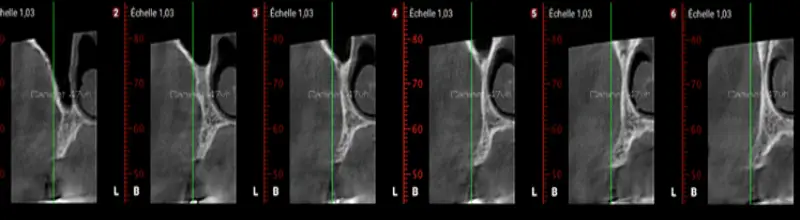
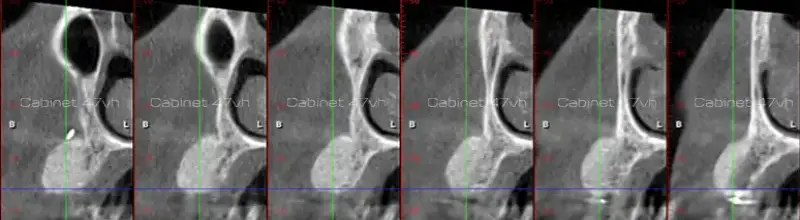
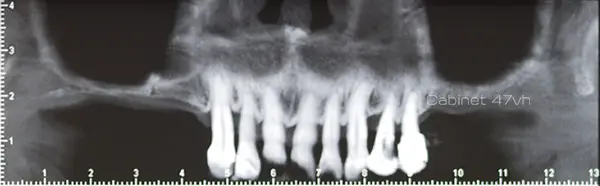
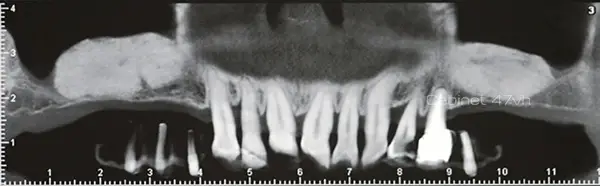
Every dental implant treatment is planned in three dimensions using CBCT imaging, allowing precise assessment of anatomical structures and careful anticipation of biomechanical constraints.
The clinic collaborates with referring practitioners to ensure continuity of care. It manages complex situations — including bone loss, grafting procedures, and implant failures — and provides structured post-operative follow-up designed to secure healing and long-term implant stability.
The 47VH clinic works in collaboration with referring practitioners in Nice and throughout the Alpes-Maritimes region, particularly for specialized surgical indications in implantology and periodontology.
After the surgical phase, the patient may continue prosthetic treatment with their general dentist. Depending on the clinical situation, coordinated follow-up may be organized to ensure therapeutic consistency.
This approach allows for in-depth technical expertise while ensuring continuity of care and a clear division of professional responsibilities.
A dental implant is a demanding surgical procedure. Its success relies on a rigorous approach that integrates:
Each dental implant procedure in Nice is systematically planned using 3D CBCT imaging. This analysis allows accurate evaluation of available bone volume, visualization of the maxillary sinuses, identification of the inferior alveolar nerve, and anticipation of biomechanical constraints.
This planning optimizes primary implant stability and reduces intraoperative risks.
This technical standard is supported by advanced university training and specialized clinical practice in periodontology and implantology.
The 47VH clinic brings together Dr. Sylvain Mouraret and Dr. Sylvain Leymarie, both holders of a postgraduate degree in periodontology and implantology (University of Paris VII).
Dr. Sylvain Mouraret completed a postdoctoral fellowship at Stanford University (USA), focusing on advanced bone regeneration and osseointegration strategies. Author of international scientific publications and a regular speaker at specialized conferences, he combines dedicated clinical practice with academic research.
Dr. Leymarie pursued academic training as a university assistant at University of Paris VII, contributing to the teaching of advanced periodontal and implant treatments. His clinical practice focuses on implant surgery and bone reconstruction.
This academic and clinical complementarity enables the 47VH clinic in Nice to provide specialized implant care, from straightforward cases to complex situations requiring bone grafting or mucogingival surgery.
The clinic manages bone loss requiring guided bone regeneration, sinus lift procedures, and high-aesthetic anterior reconstructions.
It also intervenes in post-periodontal situations and implant failures requiring revision surgery.
In each case, the practitioner performs an individualized assessment and defines an appropriate treatment strategy. The objective remains constant: to restore a stable and durable tissue environment.
In certain situations, available bone volume is insufficient for implant placement under optimal stability and safety conditions.
Bone loss may result from long-standing extraction sites, periodontal disease, or progressive maxillary resorption. In such cases, bone reconstruction performed prior to or simultaneously with implant placement may be indicated.
Guided bone regeneration allows reconstruction of bone volume suitable for implant placement using specific biomaterials and protective membranes designed to promote bone regeneration while controlling soft tissue healing.
This procedure is carefully planned using CBCT imaging to precisely assess reconstruction needs and anatomical constraints.
In the posterior maxilla, proximity to the sinus cavity may limit the available bone height. A sinus lift procedure, also known as sinus floor elevation, involves gently repositioning the sinus membrane to create space for new bone formation.
This procedure can be performed using different surgical approaches, depending on the patient’s anatomy and the initial bone volume.
The indication for bone grafting or sinus lift surgery is based on an individualized clinical and radiological assessment. The objective remains constant: to establish a stable and durable bone foundation, which is essential for the long-term success of a dental implant.

In carefully assessed cases, the clinician may place an implant on the same day as the tooth extraction. This technique, known as “immediate implant placement”, can reduce the number of surgical procedures and the overall treatment time when clinically appropriate.
However, strict criteria must be met:
When these conditions are met, immediate implant placement provides predictable outcomes. However, it does not prevent the natural bone remodelling that occurs after tooth extraction, making careful case selection essential, particularly in the aesthetic zone.
In other situations, a healing period of several weeks to several months may be preferable in order to ensure a stable biological environment.
Although dental implants have a high success rate, implant failure can still occur. It may occur early if osseointegration fails, or later, sometimes several years after placement.
Several causes may be involved, including insufficiently stabilized bone volume, mechanical overload, or peri-implantitis. In addition, uncontrolled periodontal disease or certain systemic factors may contribute.
In this context, a thorough clinical and radiological assessment is performed to accurately identify the underlying mechanism. Depending on the situation, the implant may be removed, specific treatment may be initiated, or bone reconstruction may be considered prior to delayed placement of a new implant.
Dental implant placement is performed under local anesthesia. As a result, patients generally experience no pain during the procedure.
After surgery, post-operative effects are most often mild and comparable to those of a simple tooth extraction. In practice, slight swelling or localized sensitivity may occur for a few days and then gradually subside.
A structured post-operative protocol is systematically provided. It includes hygiene recommendations, appropriate medication guidance, and temporary dietary instructions to optimize healing.
In the majority of cases, patients resume their usual activities the following day. However, they must follow post-operative instructions carefully and maintain regular periodontal follow-up to preserve long-term stability.
Learn more: Are dental implants painful?
A properly planned dental implant can last for many years. When biological and mechanical conditions are carefully controlled, long-term success rates are high.
Its longevity depends on several key factors. First, the initial bone quality and volume directly influence stability. Second, optimal primary stability must be achieved at the time of placement. In addition, the patient must control periodontal and peri-implant diseases, maintain rigorous oral hygiene, and adhere to regular clinical follow-up.
Osseointegration forms the foundation of this stability: the bone integrates durably with the surface of the implant. For this reason, the procedure is planned three-dimensionally, and both soft and hard tissues are carefully managed to optimize integration.
Finally, it is important to distinguish the implant itself from the prosthetic component (implant-supported crown or bridge). Over time, the prosthetic restoration may require adjustment, maintenance, or replacement. Regular follow-up is therefore essential to preserving long-term implant-periodontal stability.
The cost of a dental implant in Nice varies according to the clinical situation. Each treatment is adapted to bone quality, surgical complexity, and the type of prosthetic reconstruction planned.
Available bone volume, the potential need for bone grafting or a sinus lift procedure, and complementary examinations such as 3D CBCT imaging directly influence the treatment estimate.
This personalised treatment estimate, prepared following a comprehensive clinical and radiographic assessment, covers only the procedures performed at our practice: the surgical phase, the materials used and postoperative follow-up. When the implant-supported crown or bridge is provided by your regular dentist, this prosthetic phase is covered by a separate estimate issued by that dentist.
View our fees.
The consultation includes a comprehensive clinical examination, periodontal evaluation, appropriate imaging, and detailed surgical planning.
Therapeutic alternatives are then presented, along with a personalized treatment estimate.
The 47VH clinic is located on Boulevard Victor Hugo in central Nice, in immediate proximity to the Carré d’Or district and Avenue Jean Médecin.
It is easily accessible by tramway (Jean Médecin stop) and on foot from the Musiciens, Gambetta, Libération neighborhoods, and downtown Nice.
Its central location also allows convenient access from across the Nice metropolitan area and neighboring towns in the Alpes-Maritimes region.
This location facilitates the organization of pre-implant consultations, surgical procedures, and post-operative follow-up.
“
Dr Sylvain Mouraret’s opinion
In my practice, the most common mistake is attempting to replace a tooth too quickly without first stabilising the overall oral environment. An active periodontal disease, an infectious focus, dental malposition, insufficient keratinised gum tissue, or significant smoking can all compromise implant stability. Conversely, when an implant is properly planned, accurately positioned, and regularly monitored, it can provide very long-lasting stability.
The cost of a dental implant in Nice depends on the patient’s clinical situation.
It varies depending on the available bone volume, the need for bone grafting or sinus augmentation, the surgical complexity, and the type of prosthetic reconstruction.
Le devis du cabinet couvre la pose chirurgicale, les matériaux utilisés et le suivi post-opératoire. Si votre dentiste traitant réalise la couronne, celle-ci fait l’objet d’un devis séparé de sa part.
A personalized estimate is established after a clinical examination and 3D CBCT imaging, in order to provide a tailored and durable solution.
The lifespan of a dental implant can exceed 15 to 20 years when it is properly planned and well maintained.
A dental implant generally includes the surgical placement, the materials used, post-operative follow-up, and the implant-supported crown.
Clinical studies show a high long-term success rate when biological and mechanical conditions are properly controlled.
Appropriate maintenance helps preserve optimal implant-periodontal stability over time.
Yes, it is possible to place a dental implant in Nice in cases of insufficient bone volume, under specific conditions.
The stability of a dental implant mainly depends on bone quality and volume, periodontal balance, oral hygiene, and regular clinical follow-up.
These techniques ensure implant stability and long-term success after precise three-dimensional planning using CBCT imaging.
No, dental implant placement is generally not painful.
The procedure is performed under local anesthesia, which makes the surgical act painless during the intervention.
After dental implant placement, post-operative effects are usually mild and comparable to those of a simple extraction. Slight swelling or sensitivity may occur for a few days.
A structured post-operative protocol is provided to minimize inflammation and promote optimal healing.
The time interval between tooth extraction and implant placement varies depending on the clinical situation.
In some cases, a dental implant can be placed immediately after tooth extraction (immediate implant placement).
In other situations, a healing phase is required before implant placement. This delay is generally 2 to 4 months, allowing for stable bone healing to be achieved.
In some cases, an implant requires a healing phase before placement. This delay is usually 2 to 4 months, allowing for stable bone healing.
The decision mainly depends on bone quality and volume, the absence of infection, and the desired primary stability.
Yes, your dentist can complete the prosthetic restoration after implant surgery.
After dental implant placement, the prosthetic phase (crown or implant-supported bridge) can be performed by your referring dentist.
The clinic works in collaboration with referring practitioners to ensure continuity of care.
A clinical and radiological assessment, including 3D imaging, allows determination of the optimal timing for dental implant placement.
This coordination ensures both optimal implant stability and an aesthetic and functional result tailored to the patient.